

Lolita (1962) (DVD Review)
Directed By: Stanley Kubrick
Starring: James Mason, Peter Sellers, Sue Lyon
RATED: PG/REGION: 1/Widescreen/NUMBER OF DISCS: 1 (DVDr)
AVAILABLE FROM Warner Brothers

“How Did They Ever Make a Movie of Lolita?” – The Answer is: Cunning, Charm, and Peter Sellers in a Wig
Stanley Kubrick’s Lolita (1962) isn’t just a film—it’s a daring cinematic high-wire act balanced delicately between taboo and taste, innuendo and implication, shadow and spotlight. Based on Vladimir Nabokov’s scandalous 1955 novel (which made literary circles gasp and church groups faint), the movie had to navigate not only the prickly subject matter of obsession and manipulation but also the even pricklier Production Code that was still breathing down Hollywood’s neck in the early ’60s. So how did Kubrick manage to bring this twisted tale of lust and delusion to the screen without being tarred and feathered in the public square?
Simple. He didn’t really film Lolita. He filmed the idea of Lolita.
Let’s dive in.
Plot Summary (or: A Grown Man Makes Every Bad Decision Imaginable)
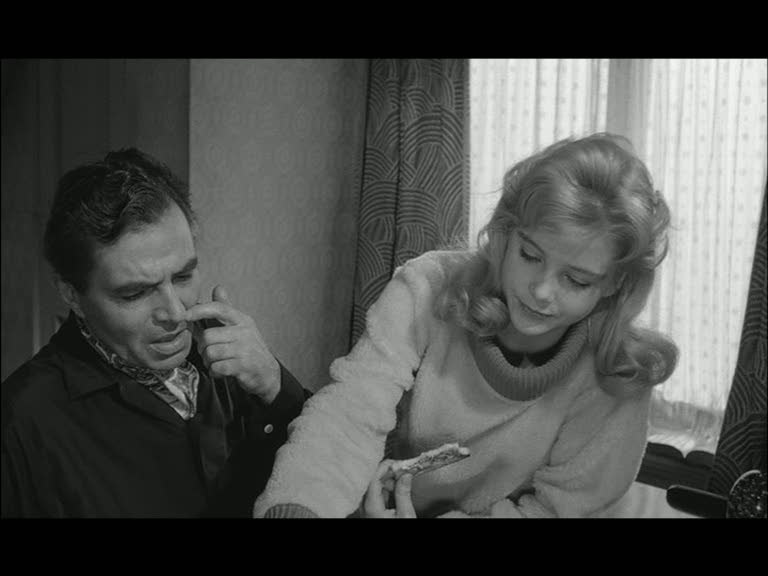
James Mason stars as Humbert Humbert, a European-accented English professor with the most dubious of moral compasses. He moves to a small New England town and boards with Charlotte Haze (Shelley Winters), a lonely, loud, and deeply thirsty widow. But Humbert doesn’t move in for the cozy domesticity—he does it for her precocious, gum-popping, bathing-suit-wearing daughter, Dolores “Lolita” Haze, played by a very teenager-ish Sue Lyon.
What unfolds is a tightrope narrative about obsession and control, painted over with a thick gloss of satire, black comedy, and increasingly surreal encounters with a mysterious playwright named Clare Quilty (Peter Sellers), who seems to be one step ahead of Humbert at every turn—like a ghost with a Groucho Marx mask.
Kubrick strips away the sexual tension that made the book so controversial and replaces it with tone, tension, and tragicomedy. The camera lingers on Mason’s increasingly sweaty face as he tries to play it cool while his world spirals into chaos. The dialogue dances with double meanings. And Lolita herself? She’s less a femme fatale and more a teenager weaponizing her limited power against a man who absolutely should know better.
The Performances: Or, James Mason Has a Nervous Breakdown in Every Scene
James Mason gives a performance so tormented, fussy, and barely-holding-it-together that it should be studied in acting classes titled How to Sweat Gracefully. He oscillates between cultured sophistication and utter desperation. One moment he’s quoting poetry, the next he’s glaring at a rival like a man trying to melt him with his eyes.
Sue Lyon, only 14 during filming, is luminous, cheeky, and just bratty enough to keep you guessing. Kubrick skirts a moral minefield by never sexualizing her onscreen (at least not overtly), but the tension is always there—making the whole movie feel like watching a chess game where every move is morally suspect.
Shelley Winters, as Charlotte, delivers a performance that’s both cringe-inducing and oddly sympathetic. She’s loud, clingy, and often delusional—but she’s also a woman who wants love in a world that hasn’t given her many good options. Winters plays her with bravado and pathos. When her fate is sealed (in a moment of tragic slapstick), it’s less shocking and more sadly inevitable.
But then there’s Peter Sellers.
Peter Sellers: A Whole Movie Unto Himself
Peter Sellers as Clare Quilty is what happens when you hand a lunatic the master key to a library of disguises and say, “Go nuts.” He appears throughout the film in increasingly bizarre forms—at one point disguised as a psychologist, at another as a beatnik playwright, and always lurking like an absurd specter of doom.
Sellers improvises many of his lines, and Kubrick, being Kubrick, just let him cook. The result is a villain who’s not so much threatening as he is weirdly inescapable. He’s like a funhouse mirror version of Humbert: same obsession, same sleaze, but less shame and a whole lot more showbiz flair.
Sellers’ scenes feel like a proto-Dr. Strangelove warm-up—watching him work is like watching jazz on film. He’s unpredictable, unnerving, and often steals the movie right out from under everyone else’s nose.
Come for the Controversy, Stay for the Chaos
Lolita isn’t a comfortable film. It’s not a “hot” film either, despite its reputation. It’s a brilliant, bitter, darkly comic exploration of delusion and disgrace, filtered through Kubrick’s meticulous lens and buoyed by performances that shift from comedic to tragic in a heartbeat.
Is it faithful to the novel? Not quite. Is it ethically complicated? Absolutely. But is it cinematic, unforgettable, and wildly unique?
Oh yes.
And honestly, if you don’t walk away from the film saying “You mean, you never heard of Clare Quilty?” in a fake accent, did you even watch it?