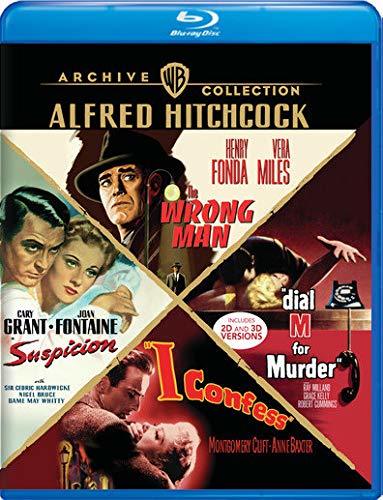


Alfred Hitchcock: 4-Film Collection (Blu-ray Review)
Number of Discs 4
Available from Warner Archive Collection
The Wrong Man (1956)
Directed By: Alfred Hitchcock
Starring: Henry Fonda, Vera Miles, Anthony Quayle
Rated: UR/Region A/1:77/1080p

Every now and then, a movie comes along that completely immerses you in its gripping narrative, leaving you breathless and emotionally invested from start to finish. Alfred Hitchcock’s The Wrong Man is one such masterpiece, defying the norms of traditional thrillers with its intense exploration of the human psyche. From its nail-biting plot to its exceptional performances, this film is a haunting and thought-provoking examination of the devastating consequences of mistaken identity. At its core, The Wrong Man delves into the concept of innocence overshadowed by a cruel twist of fate. The film follows Manny Balestrero (masterfully portrayed by Henry Fonda), a hardworking musician who finds himself accused of a series of robberies he did not commit. Hitchcock fearlessly dives deep into the terrifying reality of this wrongful accusation, skillfully exploring the themes of identity, paranoia, and the fragility of our perception of ourselves and others.
One of the most striking aspects of The Wrong Man is the film’s somber and introspective tone. Unlike Hitchcock’s more stylistic and suspenseful movies, this film opts for a more contemplative approach, inviting the audience to reflect on the despair and psychological torment experienced by the innocent protagonist. The sense of claustrophobia and helplessness is palpable, perfectly capturing the dark abyss of someone caught in an uncontrollable whirlwind of events. Henry Fonda delivers a captivating performance as Manny Balestrero, exuding vulnerability and helplessness as he struggles to prove his innocence. His portrayal is nothing short of extraordinary, drawing us into his emotional journey and making us question the boundaries between reality and perception. Vera Miles, playing Balestrero’s supportive but increasingly fragile wife Rose, brings a raw and nuanced performance that perfectly complements Fonda’s intensity. Together, they create an onscreen chemistry that enhances the film’s emotional impact.
Yet, The Wrong Man is not without its flaws. The film can occasionally feel ponderous, as it is focused more on the psychological unraveling of its characters than on fast-paced action or suspense. However, this deliberate pacing ultimately serves to deepen our investment in the characters and their plight. In its entirety, The Wrong Man transcends mere cinema, leaving an indelible mark on the viewer’s heart and mind. It resonates deeply, forcing us to question our own perceptions, our own assumptions about guilt and innocence. Hitchcock’s meticulous craftsmanship combines with superb performances to create an unforgettable exploration of the power of circumstances and the human capacity for strength and resilience. In the end, The Wrong Man serves as a chilling reminder of the potential fallibility of justice and the profound impact it can have on individuals and their loved ones. It is a stark and timeless testament to the fragility of truth itself.
Extras
- Guilt Trip: The Wrong Man (2004 featurette)
- Original Theatrical Trailer

Dial M for Murder (1954)
Directed By: Alfred Hitchcock
Starring: Ray Milland, Grace Kelly, Robert Cummings
Rated: PG/Region A/1:78/1080p

Alfred Hitchcock has once again delivered a mind-bending masterpiece with his 1954 film, Dial M for Murder. From the very first frame, this tension-filled thriller takes hold of its audience in a theatrical embrace, leaving them gasping for breath until the climactic finale. The plot revolves around Tony Wendice (played brilliantly by Ray Milland), a calculating husband who orchestrates a devious plan to murder his unfaithful wife, Margot (portrayed with sublime vulnerability by Grace Kelly). As the story unfolds, the audience becomes a voyeuristic witness to a psychological chess game. The intricate plot twists and turns with meticulous precision, constantly keeping viewers on the edge of their seats.
The acting in Dial M for Murder is nothing short of exceptional. Ray Milland crafts a chillingly charismatic portrayal of a husband consumed by jealousy, while Grace Kelly showcases her talent by effortlessly transitioning from vulnerability to strength. Their chemistry is electrifying, with each interaction feeling laden with tension and hidden motives. Supporting actors, such as Robert Cummings and John Williams, deliver compelling performances that add depth to the narrative. Hitchcock’s direction is a masterclass in suspense storytelling. His meticulous attention to detail is evident in every frame, perfectly capturing the claustrophobic atmosphere of the Wendice home. The use of long takes and precise camera movements enhances the movie’s intensity, emphasizing the emotional weight of each pivotal scene.
What truly resonates with me about Dial M for Murder is the emotional impact it provokes. The film delves deeply into the psychology of its characters, leaving no room for black and white judgments. It forces viewers to question their own moral compasses and ponder the lengths they would go to protect their own interests. This moral ambiguity, combined with the suspenseful narrative, creates an unforgettable experience that lingers long after the credits roll. In conclusion, Alfred Hitchcock’s Dial M for Murder is a timeless classic that immerses audiences in a web of suspense, betrayal, and psychological intrigue. With its exceptional performances, flawless direction, and a plot that keeps viewers guessing until the very last frame, this film masterfully illustrates humanity’s darkest tendencies. Prepare to be captivated, enthralled, and haunted by the brilliance of this suspenseful masterpiece.
Extras
- Behind-the-scenes featurettes:
Hitchcock and Dial M
3D: A Brief History - Original 1954 theatrical trailer

Suspicion (1941)
Directed By: Alfred Hitchcock
Starring: Cary Grant, Joan Fontaine, Cedric Hardwicke
Rated: UR/Region A/1:36/1080p

Suspicion, directed by the legendary Alfred Hitchcock, is a mesmerizing thriller that takes viewers on a rollercoaster ride through the depths of paranoia and doubt. This classic film grabs its audience from the first frame and never lets go, leaving hearts pounding and minds racing long after the credits roll. Set against a backdrop of elegance and charm, the plot follows Lina McLaidlaw (Joan Fontaine), a young and naïve woman who becomes infatuated with the charming but mysterious Johnnie Aysgarth (Cary Grant). As their whirlwind romance unfolds, Lina’s infatuation gradually transforms into a sinister obsession, fuelled by her rising suspicions as she delves deeper into the dark secrets of her husband.
The performances in Suspicion are nothing short of exceptional. Joan Fontaine delivers a captivating portrayal of Lina, skillfully capturing her vulnerability and inner turmoil. Cary Grant, known for his charismatic roles, demonstrates his versatility by portraying an enigmatic character that continually keeps both Lina and the audience on the edge of their seats. The chemistry between Fontaine and Grant is palpable, adding an additional layer of depth to their characters’ complex relationship. Hitchcock’s deft directorial hand is evident in every frame of Suspicion. His meticulous attention to detail is showcased through the exquisite cinematography and atmospheric lighting that perfectly amplifies the psychological intensity of the story. The production design flawlessly captures the affluent lifestyle of the characters, making their world feel both glamorous and menacing simultaneously.
However, the film is not without its flaws. Some may argue that the pacing, particularly in the first act, is slightly uneven. The initial slow burn may deter those seeking immediate thrills, but it is essential in establishing the characters and their dynamics. In conclusion, Suspicion is a cinematic gem that transcends time. Alfred Hitchcock’s masterful direction, combined with compelling performances, atmospheric visuals, and a suspenseful score, make for an unforgettable experience. Prepare to be captivated, engaged, and above all, dragged into a world where doubt reigns supreme. With its thought-provoking themes and expertly crafted storytelling, this classic psychological thriller is not to be missed.
Extras
- Before the Fact: Suspicious Hitchcock
- Theatrical Trailer
I Confess (1953)
Directed By: Alfred Hitchcock
Starring: Montgomery Clift, Anne Baxter, Karl Malden
Rated: UR/Region A/1:36/1080p

In Alfred Hitchcock’s mesmerizing thriller, “I Confess,” the iconic director explores the depths of guilt, faith, and the power of confession with his signature artistic prowess. Released in 1953, this gem from Hitchcock’s illustrious filmography delves into the moral complexities of an unforgiving world. As a master storyteller, Hitchcock adeptly crafts a haunting narrative that will leave audiences entranced and introspective. The plot is centered around Father Michael Logan (Montgomery Clift), a devoted clergyman in the picturesque city of Quebec, Canada. When a murder occurs, Father Logan is burdened with a dangerous secret – he alone knows the identity of the killer. Torn between his vows of silence and the threat of being wrongfully accused, the priest confronts his inner turmoil while struggling with the ethical implications of his choices. This film successfully explores themes of religious duty, the weight of conscience, and the sacrifice of personal happiness for the greater good. Hitchcock unfurls a riveting drama that navigates the psychological toll of secrets, the fragility of truth, and the intensity of faith. The tone is somber yet gripping, infusing a sense of impending suspense through Hitchcock’s masterful command of tension-building techniques.
Hitchcock’s direction is impeccable, flawlessly capturing the mystique and elegance of Quebec while simultaneously creating an atmosphere of suppressed tension. The intricate framing, detailed compositions, and masterful use of shadows highlight the director’s meticulous attention to visual storytelling, showcasing his mastery in creating a sense of unease. The cinematography and production design work in perfect harmony, with each shot exuding a sense of both beauty and unease. The captivating black-and-white visuals, rich in contrast and texture, simultaneously convey the serenity of the religious world and the veil of darkness that surrounds it. Though lacking the elaborate sets and grandiose special effects of some of Hitchcock’s other works, “I Confess” relies on the subtlety of its nuanced performances, thought-provoking dialog, and Hitchcock’s signature suspense-building techniques. The film brilliantly juxtaposes the tranquil world of religion with the darker aspects of human nature, resulting in a quietly intense cinematic experience.
“I Confess” proceeds at a more deliberate pace than some of Hitchcock’s other works, giving the audience ample time to absorb the emotional weight of the story. While this measured rhythm adds depth to the characters and the themes explored, it may require patience from viewers accustomed to faster-paced narratives. In conclusion, Alfred Hitchcock’s “I Confess” is a captivating masterpiece that delves into the complexities of guilt, redemption, and the boundless power of confession. Its thought-provoking themes, exceptional performances, and masterful craftsmanship make for a captivating cinematic experience. Despite its slightly slower pace, the film’s impact lies in its ability to leave audiences questioning the boundaries of duty, faith, and morality long after the credits roll.
Extras
- Hitchcock’s Confession: A Look at I Confess: Making of Documentary
- Premiere Newsreel
- Theatrical Trailer