
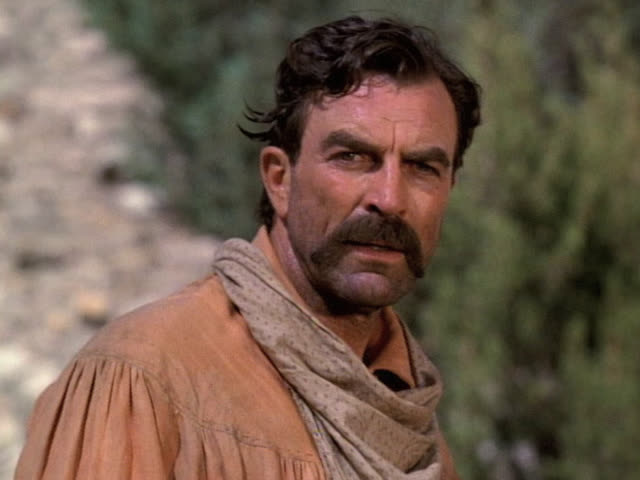


Last Stand at Saber River (1997) (BLU-RAY REVIEW)
Director: Dick Lowry
Starring: Tom Selleck, Suzy Amis, David Dukes
RATED: UR/REGION 0/1:33/1080P/NUMBER OF DISCS 1
AVAILABLE FROM Warner Archive Collection

“Last Stand at Saber River” is a gripping and emotive Western film that captures the complex tapestry of family loyalty, survival, and the haunting resonance of war. Directed by the talented Dick Lowry and based on Elmore Leonard’s novel, the film graces the small screen with a uniquely potent blend of tension and heartwarming moments, establishing it as a cult classic for fans of the genre.
Set in the post-Civil War American West, the movie unfolds in the rugged backdrop of Arizona Territory, a world that oscillates between the brutality of man and the tenderness of human connection. The narrative follows Paul Cable, played with earnest conviction by the ever-reliable Scott Moffatt, who returns home with a deep sense of loss and a relentless pursuit of justice. Moffatt’s performance is a sturdy anchor throughout the film, embodying a broken yet resolute character who navigates the tumultuous waters of personal and societal conflict.
The film’s themes are multi-layered, exploring the fractures of familial ties and the pervasive impact of war on the human psyche. Paul’s struggle with the remnants of conflict resonates deeply, as it mirrors the trauma and wounds carried by many post-war individuals. The tone oscillates between moments of intense confrontation and serene reflections, creating a pulse that keeps the viewer engaged. The film adeptly balances these tones, allowing us to feel the weight of each moment without being overwhelmed.
However, it is the score by John Debney that truly elevates the film, providing a hauntingly beautiful backdrop to the unfolding drama. The music underscores the emotional weight of the story, casting shadows and illuminating moments of hope, effectively amplifying the viewer’s experience. The pulsating score acts almost as an additional character, helping to weave the narrative together with evocative emotional undertones.
Yet, no film is devoid of its shortcomings. At times, the pacing can lag, particularly in the middle act, where the story momentarily loses its momentum. A few instances of dialogue come off as slightly stilted, serving as reminders that this is a television adaptation rather than a big-budget feature. Furthermore, while the supporting characters are fleshed out to an extent, some feel like archetypes that don’t fully evolve, which ultimately hinders the potential for deeper emotional connections.
What remains indelibly etched in my mind after the credits roll is the film’s poignant exploration of forgiveness and the bonds that tie us, even amidst betrayal and loss. “Last Stand at Saber River” encapsulates the struggles of reconciling a painful past while searching for a hopeful future. It struck a chord within me, prompting reflections on how we navigate our own “last stands” in life, facing not only the external battles but also the inner ones that shape our journeys.
While it may not reach the epic heights of classic Westerns, “Last Stand at Saber River” proudly stands on its own, a testament to the power of storytelling wrapped in compelling performances and a resonant score. It’s a poignant reminder of the human spirit’s resilience, resting on the edge of despair yet forever hoping for redemption.