


The Call (2020) (BLU-RAY REVIEW)
Director: Timothy Woodward Jr.
Starring: Lin Shaye, Tobin Bell, Chester Rushing
RATED: UR/REGION A/2:39/1080P/NUMBER OF DISCS 1 (BDR)
AVAILABLE FROM Cinedigm

In the annals of horror cinema, where shadows dance and dread lingers like a heavy fog, “The Call,” directed by Timothy Woodward Jr., strives to carve its niche. Featuring the renowned Lin Shaye and the iconic Tobin Bell, the film plunges us into a world where the past collides with the present through an eerie phone call. The premise itself holds promise, inviting us to explore the boundless possibilities of time within the horror genre. However, while the film does deliver some chilling moments, it ultimately winds up entangled in its own narrative web.
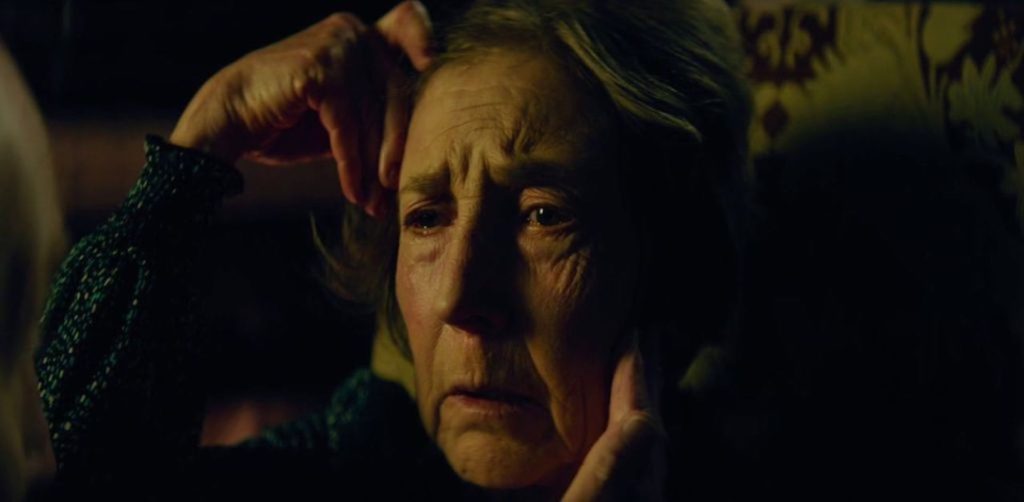
At its core, “The Call” revolves around an unsettling phenomenon—a cursed phone call capable of altering one’s fate. Shaye takes on the role of the beleaguered protagonist, Jenna, whose life is turned upside down when she receives that fateful call. Shaye’s performance is, as expected, a highlight of the film; she imbues Jenna with a vulnerability that allows viewers to empathize with her struggle against unseen forces. Bell, on the other hand, plays a pivotal role as a character shrouded in mystery. Their chemistry, laced with palpable tension, is one of the film’s strengths and offers some chilling exchanges that linger even after the credits roll.
However, while the performances ground the film, the script often falters. The dialogue can be clunky and expository rather than organic, which occasionally detracts from the emotional resonance of the characters’ journeys. The plot unfolds with the predictability of a well-worn horror trope, despite its intriguing premise, straying into territory we’ve traversed before. This familiarity dulls the tension, making it difficult to fully invest in the stakes at hand. The storytelling occasionally meanders, and while the atmosphere is anchored in a suspenseful tone, it struggles to maintain its rhythm, leaving viewers in a state of wavering engagement.
On the technical front, “The Call” succeeds in establishing a palpable sense of dread through its cinematography. The dimly lit spaces and unsettling angles effectively reinforce the film’s unsettling themes of isolation and desperation. The score complements these visuals, with dissonant notes that mirror Jenna’s unraveling psyche. In particular, the sound design adds a layer of complexity, turning mundane sounds into harbingers of terror, thus elevating the film’s most suspenseful moments.
However, one can’t help but feel that the production design, while competent, lacks the innovative flair seen in more memorable horror offerings. There’s a certain lack of boldness in its visuals—some aspects feel generic rather than evocative of the film’s chilling ethos. Moreover, while special effects play a role in delivering frights, they often come off as a touch conventional, failing to fully capitalize on the film’s more supernatural elements.
Ultimately, “The Call” oscillates between moments that genuinely evoke unease and sections that feel drawn out. The pacing dips, and the editing occasionally loses its grip, causing the story to lag during critical junctures. This dissonance hampers the film’s overall impact and leaves a viewer yearning for a more cohesive experience.
In the final analysis, “The Call” is a cinematic offering that harnesses the talents of its seasoned actors but struggles to rise above the conventions of the genre. It delivers a handful of striking moments and some nicely crafted scenes of tension, yet its pacing issues and predictability hold it back from being a true standout. Despite this, there’s a resonance in its exploration of the repercussions of our choices and the unseen forces that linger just beyond our understanding. While it may not be the call anyone wanted, it’s a film that ultimately serves as a reminder of the terrifying weight the past can bear and a call to heed the warnings of the unknown.