
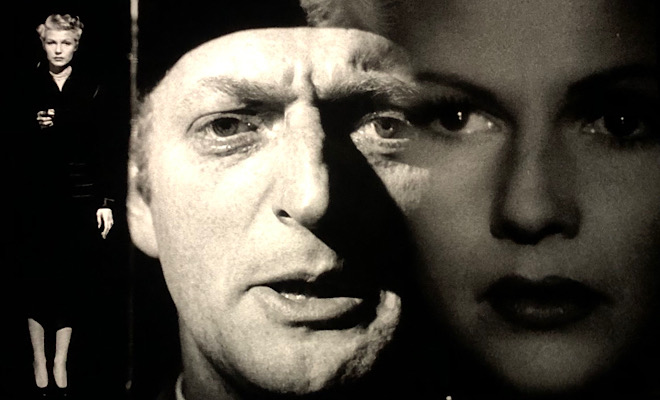


The Lady from Shanghai (1947) (4K Ultra HD Review)
Director: Orson Welles
Starring: Rita Hayworth, Orson Welles, Everett Sloane
RATED: UR/REGION 0/1:37/2160p/NUMBER OF DISCS 1
AVAILABLE FROM Sony Pictures

Orson Welles’ “The Lady from Shanghai” (1947) is a masterclass in noir filmmaking that invites viewers into a labyrinth of deceit and moral ambiguity. Welles, who helmed the project and starred as the enigmatic protagonist, brings an engaging artistry and an irresistible sense of style that feels palpably modern, even over seven decades after its release.
At its core, the film spins a tale of obsession, betrayal, and crime, centered around Michael O’Hara (played by Welles), an Irish sailor who becomes captivated by the icy and alluring Elsa Bannister, portrayed with a mesmerizing intensity by Rita Hayworth. Their ill-fated romance serves as the emotional spine of the plot, propelling Michael into a tangled web of danger woven by Elsa and her husband, an influential lawyer. Each twist in the narrative grips the audience tighter, drawing us further into a world where every character is propelled by self-interest and every exchange feels fraught with the weight of hidden agendas.
Thematically, “The Lady from Shanghai” captures the essence of classic noir—nothing is as it seems, and trust is a fleeting illusion. The film resonates deeply with the notions of identity and duplicity; especially significant is Elsa’s duality—a femme fatale who simultaneously embodies both strength and vulnerability. This complexity is echoed in Welles’ character, whose motivations are passionate yet flawed, a trait that makes him all the more relatable.
Visually, the film is stunning. The cinematography by Charles Lawton Jr. is a feast for the eyes, with striking compositions that blend shadow and light in perfect harmony. The famous “funhouse” climax remains an iconic sequence in cinematic history—an eerie and surreal embodiment of the chaos that defines the narrative. Welles’ ability to merge storytelling with composition and movement strikes a chord that lingers long after the credits roll.
The score, composed by Georges Auric, complements the tension beautifully, ebbing and flowing with the film’s emotional undercurrents. It’s both atmospheric and haunting, further enveloping the viewer in the film’s noirish embrace.
However, the film isn’t without its quirks. Some might find the pacing uneven, particularly in the second act, where it occasionally meanders before reaching its thrilling conclusion. Yet, this exploration of character adds depth, elevating the dramatic stakes as we grapple with the moral confines of each individual.

Most importantly, “The Lady from Shanghai” evokes an array of feelings that resonate beyond its runtime: a cautionary tale that simultaneously captivates and disorients. It challenges us to question our perceptions and invites us to succumb to the dark allure of love and ambition. With each viewing, I find myself drawn deeper into the haunting landscape Welles crafted, a reminder of the complexities that define the human experience.
Ultimately, “The Lady from Shanghai” is not merely a film—it’s an experience, a haunting journey through the labyrinth of desire and deception that leaves its mark on the heart long after the final frame fades away. It’s a timeless classic that demands attention, admiration, and reflection.
Extras
- Audio Commentary with Peter Bogdanovich
- Conversation with Peter Bogdanovich
- Theatrical Trailer