
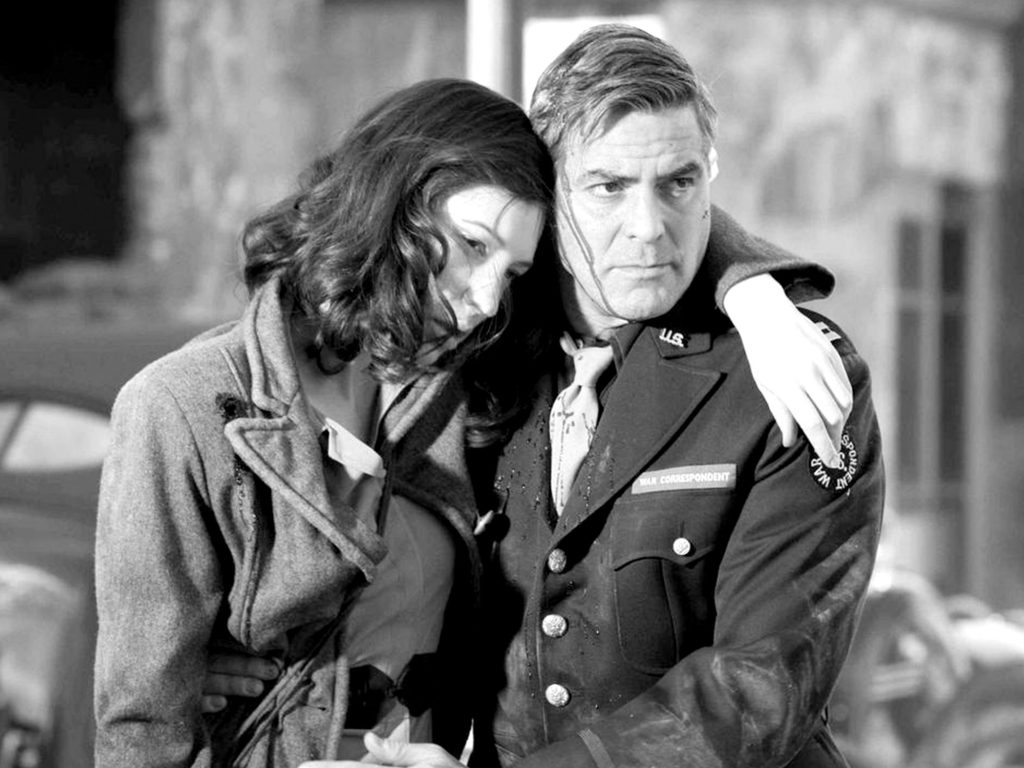


The Good German (2006) (4K Ultra HD REVIEW)
Director: Steven Soderbergh
Starring: George Clooney, Cate Blanchett, Tobey Maguire
RATED: R/REGION 0/1:37/2160P/NUMBER OF DISCS 2
AVAILABLE FROM Warner Bros.

In a bold attempt to capture the gritty essence of post-war Berlin, The Good German is deftly laced with thematic layers that echo the harrowing complexities of guilt, love, and the human condition in the wake of a devastating conflict. Steven Soderbergh’s endeavor to replicate the noir aesthetic of the 1940s feels ambitious, yet it presents a dichotomy of narrative strength and artistic stylistic execution that elicits both admiration and reservation.
The film opens with a sense of urgency, centering around Jake Geismar, played by George Clooney, an American journalist embroiled in a tumultuous affair with the enigmatic Lena Brandt, portrayed by the always mesmerizing Cate Blanchett. The plot unfolds against a backdrop teeming with intrigue and danger, navigating the remnants of war, fractured loyalties, and moral ambiguity. The raw chemistry between Clooney and Blanchett is palpable, pulsating with an undercurrent of desperation and longing that hovers over the fragmented ruins of their world.
Clooney brings to life Jake’s conflicted nature, embodying both charm and weariness; however, one cannot help but feel that his character sometimes vacillates between being a compelling anti-hero and a passive bystander, lost in the chaos around him. Blanchett, on the other hand, dazzles in her role, infusing Lena with a depth that portrays her character as both alluring and haunted. The performances are striking, yet at times muted by the heavy shadows of an overly complex narrative, leaving the emotional nuances somewhat obscured.
Soderbergh’s direction showcases his stylistic flair with striking cinematography that captures the noir ethos, especially in the meticulous attention to vintage textures and sepia-toned visuals. Each frame seems to echo with the whispers of history, a homage to the cinematic language of an era long past. The production design immerses us in this post-war landscape, illustrating the remnants of not only a physical city but also the emotional wreckage of its inhabitants. Yet, despite the film’s aesthetic allure, there are moments where the plot becomes mired in convoluted exposition, detracting from the visceral stakes and hampering the pace.
The score, composed by Thomas Newman, adeptly accompanies the film’s tone, weaving a hauntingly beautiful soundscape that underscores the tension and sorrow inherent in the story. However, at times, it felt like the emotional beats were a touch too heavy-handed, echoing when the visual storytelling could have conveyed the same weight more subtly.
The overall tone of The Good German oscillates between lyrical beauty and dense disillusionment, yet the emotional resonance can feel muted at times, clouded perhaps by the film’s ambitions. Although the film ambitiously grapples with themes of guilt and redemption, it can leave viewers in a state of ambivalence, pondering the tangential threads rather than being fully immersed in the narrative.
Ultimately, The Good German is a film that lingers in the mind, evoking a mixture of admiration for its stylistic artistry, while simultaneously leaving one yearning for a tighter narrative cohesion. It resonates deeply with the themes of love and loss, yet it doesn’t fully soar as it aspires to, making it a striking, yet flawed homage to the complexities of human connection in a fractured world. It’s a visual experience that invites reflection, but it might not fulfill all the emotional expectations you arrive with.