
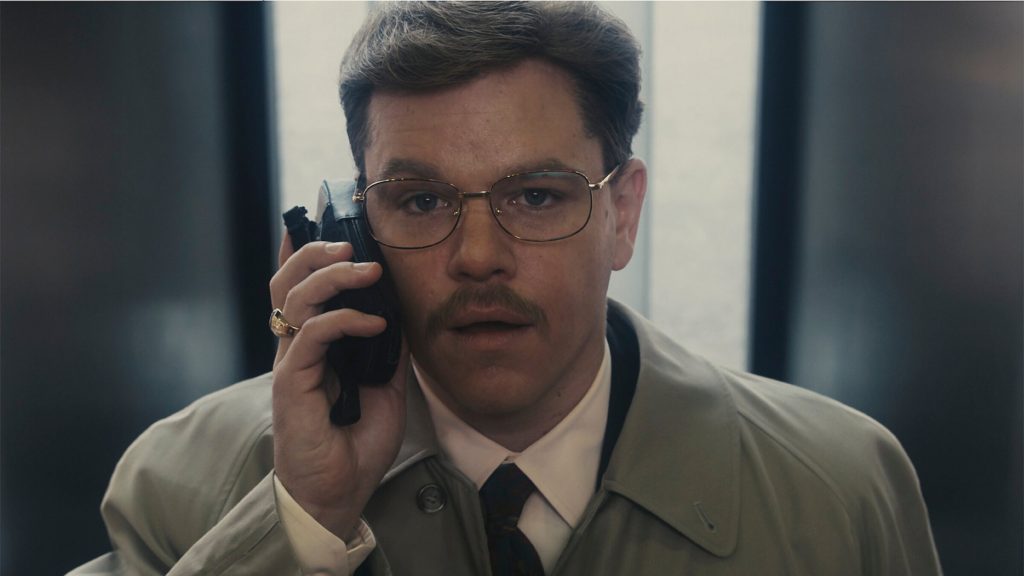


The Informant! (2009) (4K Ultra HD REVIEW)
Director: Steven Soderbergh
Starring: Matt Damon, Scott Bakula, Joel McHale
RATED: R/REGION 0/1:85/2160P/NUMBER OF DISCS 1
AVAILABLE FROM Warner Bros.

When we think of corporate espionage and the labyrinthine realities of white-collar crime, we often envision a world fraught with intense drama, deceit, and nail-biting tension. Steven Soderbergh’s “The Informant!”, however, adeptly sidesteps that conventional narrative, offering viewers a delightful, yet perplexing exploration of the absurdity that can underpin even the most serious of situations.
Set against the backdrop of the late 1990s and early 2000s, “The Informant!” follows the true story of Mark Whitacre, portrayed by Matt Damon. Whitacre is a mid-level executive at an agricultural company who turns whistleblower, revealing the company’s involvement in a price-fixing conspiracy. But as the film unfolds, we find ourselves ensnared in a spider web of his own dubious motives and increasingly outlandish assertions.
The plot is packed with twists that keep you guessing, thanks in large part to Scott Z. Burns’ sharp screenplay that dances between dark humor and high-stakes drama. The pacing is deliberate, allowing the viewer to fully absorb the nuances of Mark’s flawed character while maintaining a feet-tapping rhythm that feels almost frenetic at times. It’s a comedic take on an otherwise serious subject that leaves you both chuckling and scratching your head, questioning who exactly is the puppet master in this bizarre tale.
Damon’s performance is a masterclass in occupied ambiguity. He captures Whitacre’s eccentricities with such finesse that it’s hard to determine whether he’s a misguided hero or an unreliable narrator. His charm walks a fine line, inviting empathy for a character who is inherently duplicitous. There’s a palpable tension as we witness his descent into paranoia and deception, and Damon extends the hook of our curiosity—how much of what he says can we actually trust?
Visually, “The Informant!” is grounded yet stylized, with Soderbergh’s expert hand guiding through a vibrant palette of colors that mirror the internal conflicts of the characters. The cinematography is sharp and fluid, catching the nuances of both office landscapes and personal spaces, beautifully juxtaposing Whitacre’s calculated professional façade against his chaotic inner life.
The score, composed by Marvin Hamlisch, injects a playful 70s flair that keeps the tone light even amidst the heavy subject matter. The music feels almost like a character itself, accentuating the rhythm of Whitacre’s mind and the ridiculousness of the situations he finds himself in. It’s an effective choice that enriches the comedic atmosphere while subtly probing the darker implications of the narrative.
However, it would be remiss not to acknowledge the film’s occasional muddiness. While Soderbergh expertly balances absurdity and reality, there are moments where the narrative loses focus. At times, one might feel that the film could benefit from a tighter edit, especially as the miles of oddball revelations begin to mount and slightly obscure the central arc.
Ultimately, “The Informant!” resonates deeply as a peculiar reflection on human nature—our desires for success, recognition, and perhaps most importantly, our own self-illusion. Soderbergh invites us to laugh at the absurdity while simultaneously holding up a mirror to our moral complexities. In the end, it’s the uncomfortable realization that we are sometimes more like Whitacre than we’d care to admit: tangled in our ambitions and delusions, whether we are conscious of them or not.
As the credits roll and the final notes of Hamlisch’s score linger in the air, you find yourself both entertained and contemplative—a curious blend that confirms that sometimes the truth is stranger than fiction.